





Pure Sine Wave Inverter for Car: The Ultimate 2026+ Buyer's Guide & Setup
A comprehensive guide on choosing and installing a pure sine wave inverter for your vehicle. Learn why it's critical for sensitive electronics, how to calculate wattage, and how to future-proof your setup for 2026 and beyond.
- Why is a Pure Sine Wave Inverter Essential for Your Car?
- Core Benefits of 12V Pure Sine Inverter Benefits
- Quick Summary: Key Takeaways for Your Car's Power
- Understanding Pure Sine Wave Technology: The Heart of Stable Car Power
- The "Pure" Advantage
- Who Needs a Pure Sine Wave Inverter in Their Car? (Beyond the Basics)
- Sensitive Electronics Car Power Requirements
- Choosing the Right Pure Sine Wave Inverter for Your Vehicle (2026+ Edition)
- Step-by-Step Selection Guide
- Essential Safety Features & Certifications: Protecting Your Car and Devices
- Critical Safety Checklist
- Inverter Installation Car: Optimal Usage Tips for Longevity & Performance
- Installation Best Practices
- Pure Sine Wave Inverters vs. Modified Sine Wave: A Detailed Comparison
- Comparison Table
- The Future of In-Car Power: What to Expect in 2026 and Beyond
- 2026+ Trends
- Common Mistakes to Avoid When Using Your Car Power Inverter
- Top Mistakes
- Best Pure Sine Wave Inverter for Car: FAQ
- Can a pure sine wave inverter damage my car's battery?
- What's the real difference between pure sine wave and modified sine wave inverters?
- How do I calculate the wattage I need for my car's pure sine wave inverter?
- Are pure sine wave inverters worth the extra cost for car use?
- What sensitive electronics must use a pure sine wave inverter in a car?
- Can I install a pure sine wave inverter myself, or do I need a professional?
- How can I prevent my car battery from draining with a pure sine wave inverter?
- What are the essential safety features to look for in a car inverter?
- References
Why is a Pure Sine Wave Inverter Essential for Your Car?
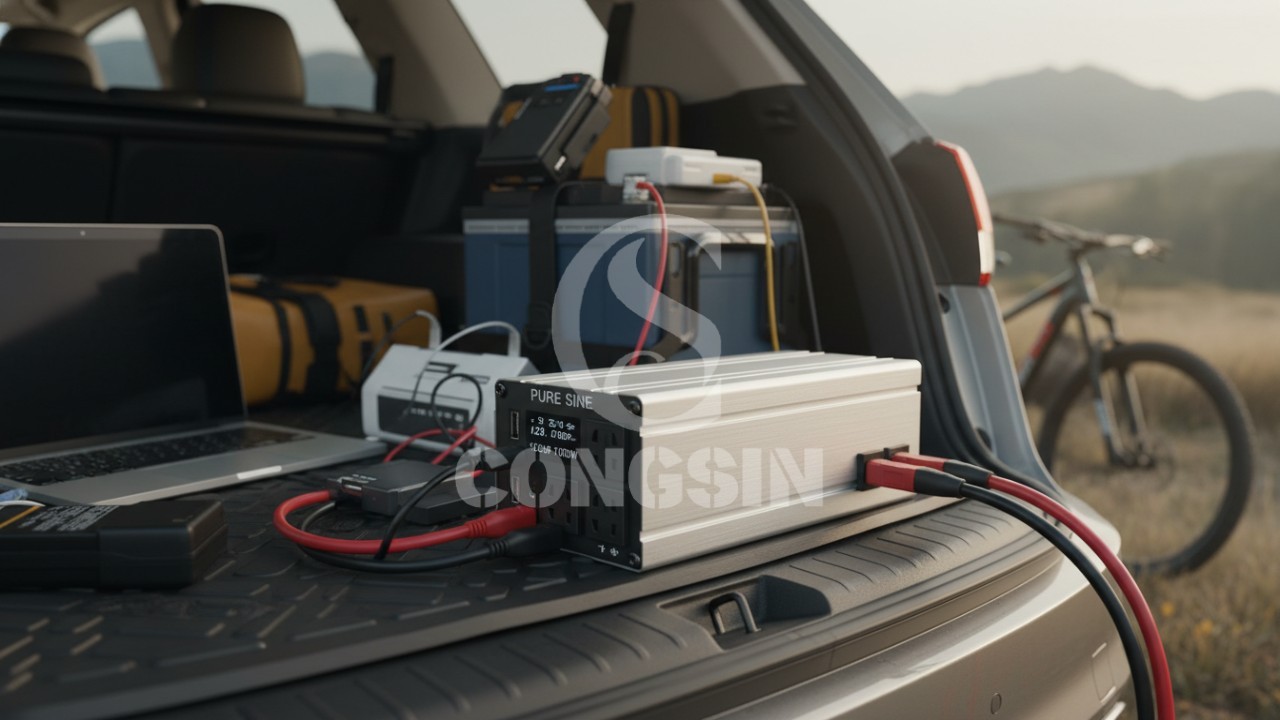
A pure sine wave inverter converts your car's 12V DC battery power into clean, stable 110V/120V AC power that mirrors the electricity from your home wall outlet. It is the only safe option for powering sensitive electronics without risking overheating, crashes, or permanent damage.
While cheaper modified sine wave inverters produce a "blocky" electrical signal, a pure sine wave inverter generates a smooth, consistent wave. This difference is critical for modern digital lifestyles. According to Grand View Research, the automotive inverter market is projected to grow at a CAGR of over 18% through 2030, driven largely by the demand for mobile office setups and reliable off-grid power.
Core Benefits of 12V Pure Sine Inverter Benefits
- Protection for Sensitive Electronics: Prevents crashes in laptops and medical devices.
- Cooler Operation: Motors in fans and tools run approx. 20% cooler.
- Clean Audio/Video: Eliminates "humming" lines in TV screens and audio systems.
- Efficiency: Reduces wasted energy as heat, extending your car battery's runtime.
-
-
Quick Summary: Key Takeaways for Your Car's Power
Pure sine wave is the gold standard for reliable in-car power, ensuring safety for medical devices, laptops, and appliances that modified wave units can destroy. Success depends on matching wattage to your devices, using proper wiring, and ensuring ventilation.
- Gold Standard: Mandatory for CPAP machines, variable-speed tools, and laser printers.
- Calculation is Key: Continuous wattage + Peak surge = Right inverter size.
- Safety First: Look for UL458 or similar safety certifications to prevent fire hazards.
- Future Proof: New 2026+ models feature Bluetooth monitoring and GaN technology for smaller sizes.
Understanding Pure Sine Wave Technology: The Heart of Stable Car Power
Pure sine wave technology utilizes advanced microprocessors to oscillate DC voltage into a smooth, curving AC wave with very low harmonic distortion. This process mimics utility grid power, ensuring that devices with active power factor correction (PFC) supplies operate efficiently.
Standard "modified" inverters create a stepped square wave. While fine for a simple toaster filament, this "dirty" power causes micro-surges in capacitors found in power supplies.
The "Pure" Advantage
- No Electromagnetic Interference (EMI): Crucial for radios and communication gear.
- Extended Device Lifespan: Reduces internal heat stress on components.
- Data Integrity: Prevents random hard drive corruption in computers.
Who Needs a Pure Sine Wave Inverter in Their Car? (Beyond the Basics)
You need a pure sine wave inverter if you power medical equipment, variable speed motors, or any device with a microprocessor or digital clock. It is no longer just for RV enthusiasts; it is a requirement for the modern mobile workforce.
Data from Lang Marketing (2025 report) indicates a surge in DIY and remote work vehicle modifications, highlighting a shift toward high-quality electronics in personal vehicles.
Sensitive Electronics Car Power Requirements
- Remote Workers: Laptops (Apple MacBooks are notoriously sensitive), monitors, and Starlink setups.
- Medical Needs: CPAP machines and oxygen concentrators require stable voltage to maintain pressure settings.
- Content Creators: Charging drone batteries and camera gear safely.
- Audiophiles: High-end audio amps that amplify "buzz" from modified waves.
- Gamers: Consoles like PS5 or Xbox Series X which have sensitive internal power supply units (PSUs).
Choosing the Right Pure Sine Wave Inverter for Your Vehicle (2026+ Edition)
To choose the correct inverter, you must calculate the total continuous wattage of all simultaneous devices and ensure the inverter's peak rating can handle the highest startup surge. A buffer of 20% is recommended for safety and longevity.
Step-by-Step Selection Guide
- Wattage Calculation:
- Laptop (60W) + Phone (20W) + CPAP (90W) = 170W Total.
- Recommendation: Buy a 300W inverter to run cool and efficient.
- Voltage Compatibility: Ensure you select a 12V pure sine inverter for standard cars (24V is for large trucks).
- Input/Output Ports: Look for PD (Power Delivery) USB-C ports which are standard in 2026 models for fast-charging phones directly.
- Installation Type:
- Cigarette Lighter: Max 150W (limited by car fuse).
- Direct-to-Battery: Required for anything over 300W.
- Advanced Features for 2026+: Look for Gallium Nitride (GaN) transistors which make units 40% smaller and cooler.
Essential Safety Features & Certifications: Protecting Your Car and Devices
A safe inverter must include automatic shutdown protocols for overload, low-battery voltage, and overheating to prevent vehicle fires or battery death. Never compromise on safety certifications when dealing with high-current automotive electricity.
Critical Safety Checklist
- Low Voltage Shutdown: Cuts power (usually at 10.5V) so you can still start your car.
- Thermal Protection: Internal fans that ramp up based on load/heat.
- GFCI Outlets: Essential for protection against shocks, especially if used outdoors.
- Short-Circuit Fuse: Internal or external fuses that blow before your wiring melts.
- Certifications: Look for UL, ETL, or CE marks. Uncertified units are a fire risk.
Inverter Installation Car: Optimal Usage Tips for Longevity & Performance
Proper inverter installation car procedures require high-quality copper wiring, fused connections close to the battery, and a well-ventilated mounting location. Improper installation is the #1 cause of inverter failure and vehicle electrical fires.
Installation Best Practices
- Wire Sizing: Use thick gauge wire (e.g., 4 AWG for 1000W). Undersized wires cause voltage drop and heat.
- Fuse It: Install an ANL fuse on the positive cable within 12 inches of the battery.
- Ventilation: Mount the inverter in a dry area with at least 2 inches of clearance for airflow. Under a seat is often too hot.
- Grounding: Connect the chassis ground lug to a clean metal point on the vehicle frame to discharge static/shorts.
- Battery Health: Use a Deep Cycle (AGM or Lithium) battery if you plan to run the inverter with the engine off.
Pure Sine Wave Inverters vs. Modified Sine Wave: A Detailed Comparison
The primary difference is that pure sine wave inverters produce clean, grid-quality power safe for all devices, while modified inverters produce choppy power that causes heat and interference. While modified inverters are 20-30% cheaper, the risk to expensive electronics usually outweighs the savings.
Comparison Table
Feature Pure Sine Wave Modified Sine Wave Waveform Smooth, curvaceous Blocky, stepped square Efficiency High (90%+) Moderate (80-85%) Device Safety 100% Safe Risky for sensitive electronics Motor Running Cool & Quiet Hot & Noisy Cost $$$ $ Best For Medical, Laptops, Audio Lights, Simple Elements The Future of In-Car Power: What to Expect in 2026 and Beyond
The future of in-car power lies in smart integration, where inverters communicate with vehicle energy management systems and utilize lighter, more efficient materials like Silicon Carbide (SiC). We are moving towards bidirectional power flow capabilities.
According to S&P Global Mobility, the electrification of the automotive sector is pushing for "Vehicle-to-Load" (V2L) capabilities, effectively turning EVs into giant pure sine wave inverters on wheels.
2026+ Trends
- Smart Integration: App-based monitoring of battery voltage and load via Bluetooth.
- Bidirectional Charging: Inverters that can also charge the battery from grid power (Combi-units).
- Compact Designs: New GaN chips allow 1000W inverters to fit in a glovebox.
- Renewable Handshake: Seamless plug-and-play ports for portable solar panels.
Common Mistakes to Avoid When Using Your Car Power Inverter
The most common mistake is overloading the inverter by confusing peak surge wattage with continuous running wattage, followed closely by using undersized wiring. These errors lead to immediate shutdowns or dangerous overheating.
Top Mistakes
- Overloading: Trying to run a 1500W heater on a 1000W inverter.
- Input Voltage Mismatch: Buying a 24V inverter for a 12V car battery.
- Idling Too Long: Draining the starter battery to the point where the car won't start.
- Using Modified Wave: damaging a $1000 CPAP machine to save $50 on an inverter.
- Poor Connections: Loose battery terminals create resistance and heat (fire hazard).
Best Pure Sine Wave Inverter for Car: FAQ
Can a pure sine wave inverter damage my car's battery?
A pure sine wave inverter itself does not damage the battery, but excessive use without the engine running will drain it. Always use the inverter's low-voltage shutdown feature and consider an auxiliary deep-cycle battery for heavy use.
What's the real difference between pure sine wave and modified sine wave inverters?
Pure sine wave inverters produce a smooth waveform identical to household power, ensuring safety for all devices. Modified sine wave units output a blocky signal that causes overheating in motors and malfunction in sensitive electronics.
How do I calculate the wattage I need for my car's pure sine wave inverter?
Sum the continuous wattage of all devices you intend to use simultaneously and add a 20% buffer. For motorized devices (fridges, power tools), ensure the inverter's peak rating is double the device's running wattage to handle startup surge.
Are pure sine wave inverters worth the extra cost for car use?
Yes, they are worth the investment if you power laptops, cameras, medical devices, or power tools. The cost of replacing a fried laptop power supply or a damaged CPAP machine far exceeds the price difference of the inverter.
What sensitive electronics must use a pure sine wave inverter in a car?
Devices requiring pure sine wave include CPAP machines, oxygen concentrators, laser printers, variable-speed drills, and digital clocks. Audio equipment and high-end gaming laptops also strongly require clean power to function correctly.
Can I install a pure sine wave inverter myself, or do I need a professional?
Plug-and-play units (under 300W) are simple DIY tasks, but hardwiring high-wattage units requires electrical knowledge. If you are uncomfortable with fusing, crimping heavy gauge wire, and grounding, hire a professional to avoid fire risks.
How can I prevent my car battery from draining with a pure sine wave inverter?
Limit inverter use when the engine is off, or install a dual-battery system with an isolator. Regularly monitor your battery voltage via the inverter's display or a separate voltmeter.
What are the essential safety features to look for in a car inverter?
Mandatory features include Overload Protection, Low Voltage Shutdown, Short Circuit Protection, and Thermal Cutoff. A GFCI outlet is also highly recommended for protecting users from electrical shocks.
References


Modified Sine Wave Inverters
Can this 2000W inverter power an air conditioner?
If the air conditioner power is within 2000W and the input is AC220V, it can supply power normally. It is recommended to ensure stable power when starting.
What devices can this inverter support?
It can power laptops, phones, cameras, and other small appliances.
Can it be used with a car cigarette lighter socket?
Yes, it supports both battery clip and cigarette lighter connection.
Pure Sine Wave Inverters
Does it have a charging (UPS) function?
No, this model is a pure inverter without UPS function.
Distributor
What kind of distributors are you looking for?
We seek distributors with experience in the amusement or entertainment equipment industry and a strong local market presence.
Get in Touch with Our Team
You can also communicate with us directly through our online contact form. Please fill in the following information, and our team will contact you as soon as possible after receiving your message.

CONGSIN is a trusted OEM factory for power inverters, solar charge controllers, and DC converters. Reliable solutions for global B2B buyers.
 High Quality
 7/24 Service
 Guaranteed Warranty
© 2025 Congsin. All Rights Reserved.